The Folklore & Fiction Winter Solstice Courses
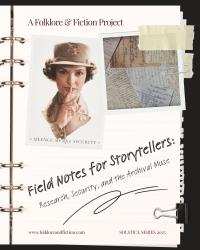
Field Notes for Storytellers: Research, Security, and the Archival Muse
Field Notes for Storytellers: Research, Security, and the Archival Muse fills a wide gap in storytelling instruction by helping you organize and conduct the research that underpins the stories you tell. There are four modules in the course, and each of them draws upon my experience as a storyteller, a folklorist, a doctoral researcher of ethically sensitive topics, and the CEO of a technology company.
The bonus Field Notes for Storytellers Resource List contains links and descriptions for twenty-two free folklore resources you can download or access right now and dozens of hardware and software options to consider for implementation in your technology and security workflows.
"Dodging the Rabbit Hole: Creative Research Workflow for Storytellers" (Module One)
Good storytelling begins with good research, but it's far too easy to fall down a rabbit hole and get lost on the way to the information you need. "Dodging the Rabbit Hole" offers the remedy for this with a Creative Research Workflow that guides you from brainstorming to revision. Learn how to turn a seed idea into a premise and research question(s), conduct a literature review that serves the story you want to tell, organize your notes into an outline, and turn them into a draft with robust story elements.
"Love That Local Knowledge: Conducting Archival and Ethnographic Research" (Module Two)
Archives and ethnographic interviews are fantastic resources for storytellers, but they're often overlooked in favour of Internet and library counterparts. "Love That Local Knowledge" aims to change that with basic best practices for conducting archival and ethnographic research. Learn how to prepare for your visit to an archive, how to conduct archival research, and how to cover your ethical bases when you're working with these materials. In addition, learn how to conduct an ethnographic interview, what equipment you need and how to use it, and what ethical and archival procedures to follow afterwards.
"Safe Secs: OpSec, InfoSec, and PerSec for Ethnographers, Journalists and Non-Fiction Writers" (Module Three)
Not many people know my doctoral research involved interviewing activists who might have broken the law. And you know what? That's exactly as it should be. "Safe Secs" is for fellow ethnographers, journalists, and non-fiction writers who want to tell important but thorny stories and need to implement extra security measures but don't know where to begin. You'll learn what operational security, information security, and personal security are in relation to sensitive research, basic measures you can take to make your projects more secure, and how these measures played out in my doctoral field work.
"Kit Up: Research and Security Tool Kits for Storytellers" (Module Four)
"Kit Up" follows the Creative Research Workflow in "Dodging the Rabbit Hole" and the InfoSec recommendations in "Safe Secs" with a robust discussion of technology for storytellers. This process-forward module teaches you how to use software solutions for capturing seed ideas, developing your premise and research questions, managing your literature review, organizing your research materials, and formatting your manuscripts. It also provides recommendations for Internet writing aids, submission tracking, and security-forward hardware and software.
Course Pricing and Availability
Field Notes for Storytellers: Research, Security, and the Archival Muse is priced at $250 CAD, and payment options are available for those who want to pay over time.